Access Control
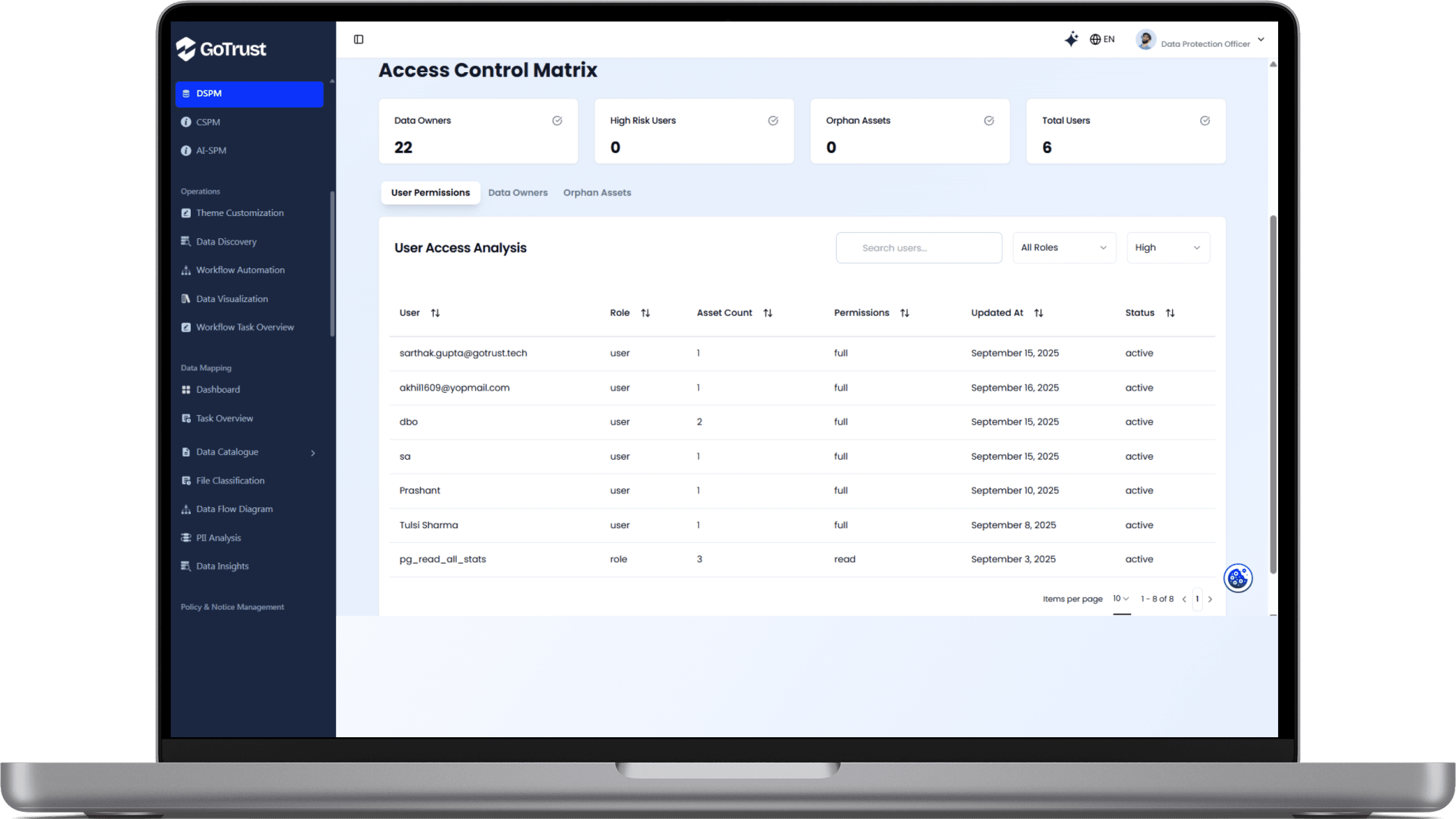
Access Control in GoTrust is a policy-driven framework that ensures only the right individuals have the right access to the right data at the right time. It combines role-based (RBAC) and attribute-based (ABAC) controls, integrated with identity systems, and fully auditable for regulators.


Why Access Control is Non-Negotiable
1. Most data breaches are caused by mismanaged access or insider threats.
2. Regulators demand demonstrable evidence of least-privilege access enforcement.
3. Without proper access controls, enterprises risk non-compliance, reputational loss, and financial penalties.
Core Capabilities
Granular Policy Enforcement
A. Restrict access based on:
1. User role
2. Business justification
3. Data sensitivity (tagged PII, financial, or health data)
IAM & SSO Integration
A. Integrates with enterprise identity systems (Azure AD, Okta, Ping Identity).
B. Enforces authentication & MFA requirements.
Risk-Based Access Decisions
A. Access adjusted dynamically based on:
1. Location
2. Device posture
3. Risk category of data
Auditability & Traceability
A. Every access event logged and tied back to risk registers.
B. Enables evidence-based compliance reporting.
Legal Relevance & Examples
1. DPDPA Sec. 8(5): Processing must be limited to what is necessary for the purpose.
2. GDPR Art. 32: Controllers must implement technical measures to restrict access.
3. RBI Cybersecurity Framework (2016 Annex II): Banks must monitor and control privileged access.
4. SEBI CSCRF: Requires strong controls for vendor and third-party access. ta breaches are caused by mismanaged access or insider threats.
Business Impact
With GoTrust Access Control, organizations achieve zero-trust aligned governance, ensuring regulators, auditors, and boards can trust that data is accessed responsibly, lawfully, and securely.



GoTrust Knowledge Hub
Stay informed with insights, updates, and expert perspectives on data privacy, compliance, and digital trust.


